

Quick Answer: The Most Accurate At-Home Method
If you want the best DIY accuracy, measure an existing ring (one that already fits) by its inside diameter and match it to a ring size chart. If you don’t have a ring, use the paper strip method and measure your finger circumference carefully.
Why Ring Size Matters (More Than You Think)
When a ring fits right, it feels “there” but not annoying. When it doesn’t, you notice it every second. A ring that’s too tight can hurt, leave marks, or get stuck. A ring that’s too loose can spin around, feel wobbly, or even fall off when you wash your hands.
That’s why learning how to measure ring size at home is super useful—especially if you’re buying a ring online, ordering a surprise gift, or picking a ring style (like a wide band) that fits differently than a thin ring.
What You Need to Measure Ring Size at Home
You don’t need fancy tools. Here are the basics:
-
A thin strip of paper (about 0.5–1 cm wide)
-
Tape or a pen
-
A ruler (millimeters are best)
-
Scissors
-
Optional: a ring that already fits, a printer, a caliper (if you’re extra serious)
Pro tip: If your ruler only shows inches, you can still do it, but millimeters (mm) are more accurate for ring sizing.
Method 1: Measure Ring Size at Home with a Paper Strip (Recommended)
This is the most reliable method if you don’t already have a ring that fits.
Step-by-step
-
Cut a paper strip (thin and smooth).
-
Wrap it around your finger where the ring will sit.
-
Make it snug but not tight. You should be able to slide it over your knuckle with a little effort.
-
Mark the overlap point with a pen (where the paper meets itself).
-
Lay the strip flat and measure from the end to the mark with a ruler in mm.
-
Match the measurement to a ring size chart (US sizes are most common for US shoppers).
Make it more accurate
-
Do it 3 times and use the average.
-
Measure at normal body temperature (not right after a hot shower or cold weather).
-
If your knuckle is bigger than the base of your finger, measure both and choose a size that can pass the knuckle without being loose at the base.

Method 2: The String Method (Works, But Be Careful)
A lot of people try string because it’s easy. The problem is string can stretch, which makes your ring size wrong.
If you use string, do this:
-
Wrap the string around your finger.
-
Mark where it overlaps.
-
Lay it flat and measure in mm.
-
Repeat 3 times.
Why it can fail
-
String stretches when you pull it tight.
-
Fluffy yarn or thick string adds extra size.
-
The mark can slide.
If you can, paper is better than string.

Method 3: Measure an Existing Ring with a Ruler (Very Accurate if Done Right)
If you already own a ring that fits the exact finger, this method is great.
What to do
-
Place the ring on a flat surface.
-
Measure the inside diameter straight across the ring (from inside edge to inside edge).
-
Measure in millimeters.
Then match that diameter to a ring size chart.
Extra tip
If you have a phone and good lighting, you can take a close-up photo of the ring next to a ruler. Just make sure the camera is straight above the ring to avoid weird angle distortion.
Method 4: Printable Ring Sizer (Fast, But Printing Must Be Perfect)
Printable ring sizers can be accurate, but only if your printer scaling is correct.
How to do it safely
-
Print the ring sizer page.
-
Check the “test” line (many printables include one).
-
If it says “this line should be 50 mm,” measure it with a ruler.
-
-
If the test line is wrong, your ring size will be wrong too.
Common printing problem
Printers often auto-scale to “Fit to page.” You usually need:
-
Scale: 100%
-
No “fit” or “shrink” options
Ring Size Tips for Wide Bands, Big Knuckles, and Comfort Fit Rings
Not all rings fit the same, even at the same size.
Wide band rings
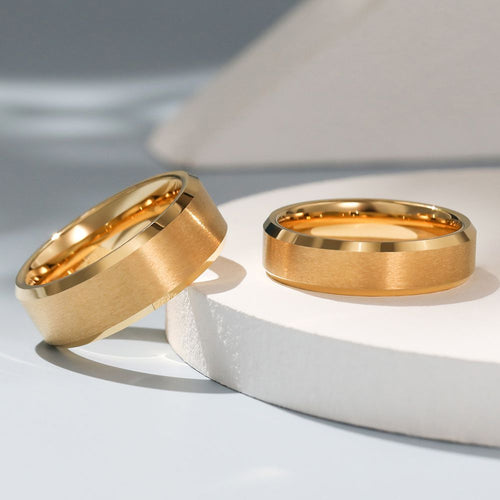
Wider rings (like 6mm, 8mm, or 10mm bands) feel tighter because they touch more skin. Many people go up about half a size for wide bands.
Big knuckles
If your knuckle is bigger than the base of your finger:
-
The ring must pass the knuckle comfortably.
-
But it shouldn’t spin like a toy once it’s on.
Try this trick: measure the base AND the knuckle. If the difference is big, consider:
-
Half sizes
-
Comfort-fit styles
-
A jeweler’s sizing beads (helps reduce spinning)
Swelling changes your size
Your finger size can change during the day:
-
Bigger in heat, after exercise, or late afternoon
-
Smaller in cold weather or early morning
Best time to measure: mid-day, normal temperature.

Common Mistakes When Measuring Ring Size at Home
These are the mistakes that mess people up the most:
-
Pulling too tight (especially with string)
-
Measuring when your hands are cold (you’ll size too small)
-
Not thinking about the knuckle
-
Using a thick strip that adds extra circumference
-
Only measuring once
-
Guessing conversions between US/UK/EU without a chart
-
Not considering band width (wide bands feel tighter)
If you want to avoid returns, take your time here. Five extra minutes can save you a lot of stress.
Ring Size Conversions: US vs UK vs EU (What You Should Know)
Different countries label sizes differently:
-
US sizes are numbers (like 6, 7, 8)
-
UK sizes are letters (like L, M, N)
-
EU sizes are usually based on circumference in mm (like 52, 54, 56)
If you’re shopping online, always check which system the store uses, and use a conversion chart that matches that system.
Simple rule: Don’t “eyeball” conversions. Use the chart every time.
FAQ: Measuring Ring Size at Home
How do I measure ring size at home without a ruler?
You can still do it, but accuracy drops. The best backup is a printable ring sizer (if you can print) or comparing your paper strip length to something with known size (like a measuring tape). If possible, borrow a ruler—ring sizing is small measurements.
What if I’m between two ring sizes?
If you’re in-between:
-
For thin bands, you can usually go down.
-
For wide bands, go up.
-
If you swell a lot during the day, go up.
How tight should a ring feel?
Snug enough that it doesn’t fall off, but loose enough that:
-
you can twist it off, and
-
it doesn’t hurt or leave deep marks.
Can I measure my ring size at home for a surprise gift?
Yes, but be sneaky:
-
Borrow a ring they already wear on the correct finger.
-
Measure its inside diameter.
-
Or trace the inner circle on paper (not as accurate, but better than guessing).
Should I still get sized by a jeweler?
If the ring is expensive, custom, or a “forever ring,” getting sized professionally is smart. But for most everyday rings, these at-home methods work really well if you measure carefully.
Final Checklist (Before You Order)
-
✅ Measured at least 3 times
-
✅ Used mm (not just inches)
-
✅ Considered knuckle + swelling
-
✅ Considered band width
-
✅ Confirmed the shop’s size system (US/UK/EU)
If you want, tell me which country sizing you need (US/UK/EU) and whether it’s a thin ring or wide band, and I’ll help you choose the safest size based on your measurement.
Related sourcing pages: custom jewelry manufacturing and OEM and ODM jewelry services.
OahlanJewelry Blog Tips
Readers are welcome to read the message and comments, and give their opinions, we will humbly adopt. Reproduction is prohibited without the permission of Oahlan.
Sample lookbook gallery